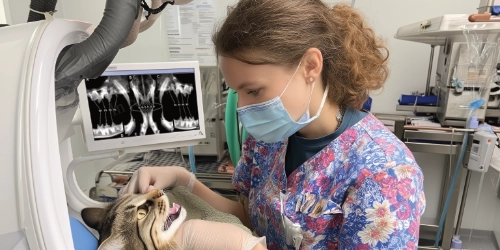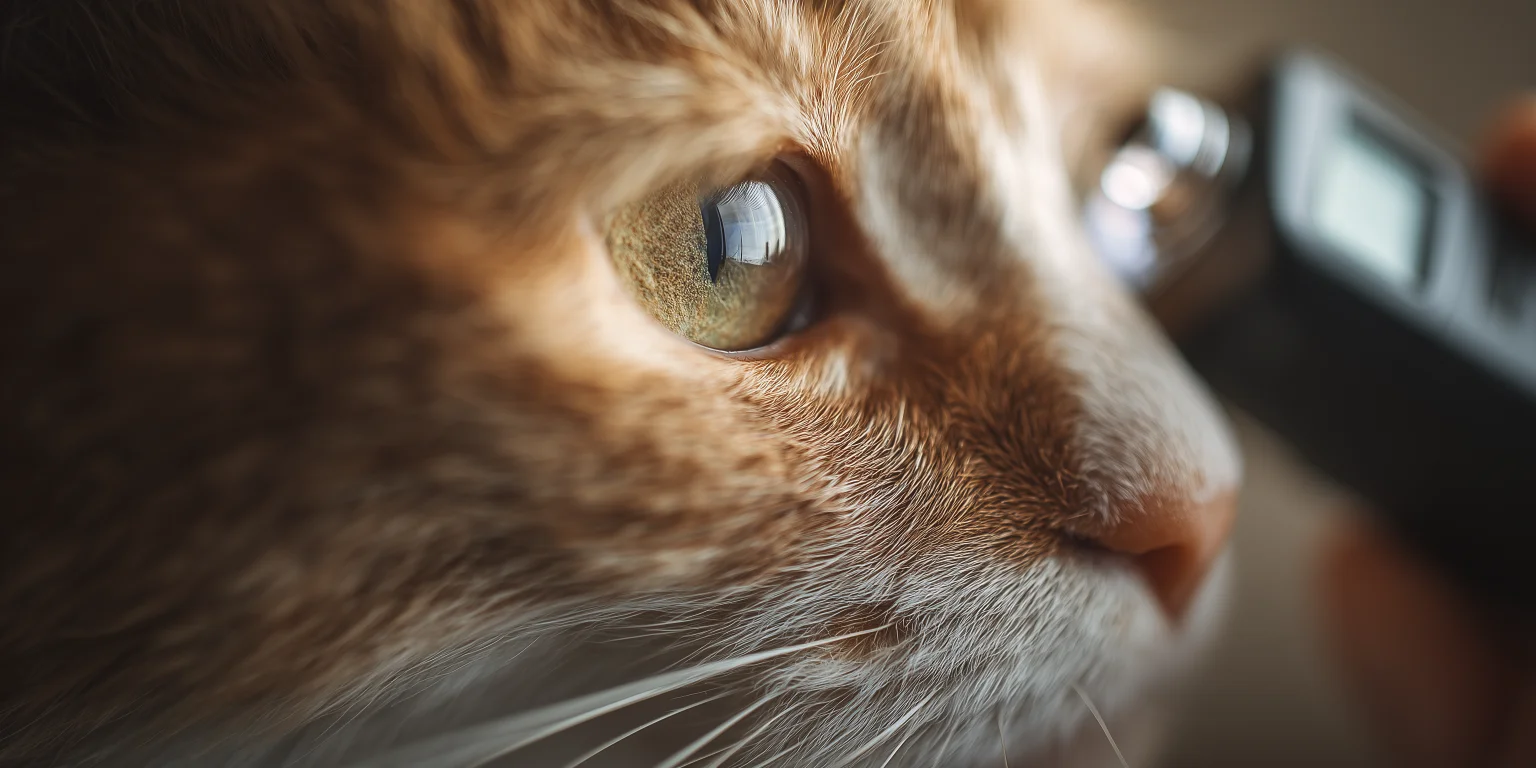
They say the eyes are the windows to the soul. But in veterinary medicine, they are also a window into your pet’s systemic health and they are incredibly delicate.
If you have ever come in with a pet suffering from a “red eye” or a “squinty eye,” you might have seen us pull out a small, pen-like device and gently tap it against your pet’s eyeball.
This is Tonometry.
At North Hill Veterinary Clinic, this simple, quick test is the difference between diagnosing a minor infection and catching a blinding disease before it’s too late.
Here is what we are measuring and why it matters.
What is Tonometry?
Tonometry is the measurement of Intraocular Pressure (IOP).
Think of your pet’s eye like a water balloon. It is constantly producing fluid (Aqueous Humor) to keep the eye round and nourished. This fluid drains out at the same rate it is produced, maintaining a stable pressure.
If the drain blocks: The fluid builds up, and the pressure spikes (like over-inflating the balloon). This is Glaucoma.
If the production stops: The pressure drops and the eye becomes soft. This usually indicates internal inflammation (Uveitis).
Tonometry tells us the exact pressure inside that “balloon” in millimeters of mercury (mmHg).
The Silent Thief of Sight – Glaucoma
The main reason we perform Tonometry is to screen for Glaucoma.
Glaucoma is one of the most painful conditions a pet can experience (often described as a severe migraine behind the eye). More dangerously, it is a medical emergency.
If the pressure in the eye gets too high, it crushes the optic nerve and the retina. This can cause permanent, irreversible blindness in as little as 24 to 48 hours.
Because dogs and cats are stoic, they won’t always cry out. They might just sleep more or rub their face. By the time the eye looks “bulging,” it is often too late to save the vision. Tonometry allows us to catch the spike before the damage is permanent.
What to Expect During the Test
If you have been to a human optometrist, you might remember the “puff of air” test. Veterinary Tonometry is a little different, and much less startling!
We generally use one of two handheld devices (The Tono-Pen or the TonoVet).
1. The Prep
For most devices, we apply a single drop of Local Anesthetic to the eye. This numbs the surface instantly so your pet doesn’t feel a thing. (Some modern “rebound” tonometers are so light they don’t even need the drops!).
2. The Tap
We gently tap the device against the center of the cornea (the clear surface of the eye) a few times. It feels like a feather touch.
3. The Result
The device gives us a digital reading in seconds.
Normal: Usually between 10–25 mmHg (depending on the species).
High (>25-30): Suspected Glaucoma.
Low (<10): Suspected Uveitis (Inflammation).
When Do We Recommend It?
We don’t check eye pressure at every vaccination, but we will reach for the Tonometer if:
** The “Red Eye”:** Any red, angry eye could be Conjunctivitis (Pink Eye) OR Glaucoma. We can’t tell just by looking. We must check the pressure to rule out the dangerous one.
Cloudy “Blue” Eyes: If the clear window of the eye looks foggy or blue, it means there is fluid in the cornea—a classic sign of pressure issues.
Squinting/Pain: If your pet is holding one eye shut.
Breed Predisposition: Certain breeds are genetically prone to Glaucoma (e.g., Cocker Spaniels, Basset Hounds, Samoyeds, Chow Chows, and Siberian Huskies). We may recommend regular checks for these breeds as they age.