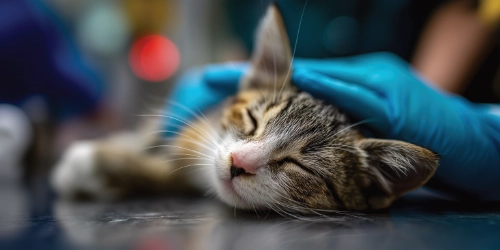
The decision to neuter is one of the most impactful decisions you’ll make for your puppy or kitten. The primary goal of animal sterilisation is to prevent reproduction, but the benefits extend far beyond this and the health effects of neutering are overwhelmingly positive.
Benefits for Neutered Animals
The positive outcomes for a spayed or neutered pet are well-documented. As a pet that has been spayed and neutered is protected from many serious health issues.
| Benefit Category | For Male Pets (Castrated**) | For Female Pets (Spayed*) |
| Health | – Eliminates the risk of testicular cancer and reduces the risk of prostate disease, including benign enlargements. – The penis is unaffected. | – Prevents uterine infections and cancer of the uterus. – Greatly reduces the risk of mammary tumours. |
| Behavior | – A neutered dog or cat is less likely to roam, mark territory, or display other unwanted reproductive behavior. | – Eliminates the heat cycle. There will be no litters of puppies or kittens. |
| Community | – Every neutering helps reduce the number of unwanted pets in shelters. | – Fewer stray pets means a safer community. |
* Spaying: This is the specific term for the procedure in female animals (the removal of the ovaries and uterus).
** Castration: This is the specific term for the procedure in male animals (the removal of the testes).
Before and After the Neuter Surgery
To ensure the best outcome when spaying or neutering your pet, we recommend discussing the following with our local Armidale veterinarians:
- Optimal Timing: Recent veterinary studies, including some published in Frontiers in Veterinary Science, have explored the link between neutering age and development, especially in large canine breeds where orthopaedics are a concern. We can advise on the perfect time to neuter your individual pet.
- Discussing Risks: While sterilization is very safe, any veterinary procedure has risks. For a small percentage of female canine patients, incontinence can be a long-term side effect. We believe in transparency and will discuss how to manage the risk of incontinence.
- Surgical Alternatives: While surgical neutering is our primary method, we stay current with all veterinary advancements.
- Post-Op Care: After the spay / neuter, carefully monitor the incision. Check daily for swelling and watch for any signs of vaginal discharge in spayed females. Proper care of the incision point is important in preventing infections. Limiting activity prevents issues like incontinence from developing due to strain.
Neutering Procedure
At North Hill Veterinary Clinic, our experienced veterinarian team ensures the neutering process is safe. We treat every animal sterilisation as a significant veterinary procedure. Our protocol for every spay/neuter is meticulous.
- Pre-Anaesthetic Health Check: Before any surgery, your pet receives a full health check from our vet to ensure they are fit for anaesthesia.
- Anaesthesia and Monitoring: Your pet is placed under general anaesthesia. A dedicated veterinary nurse monitors their vital signs throughout.
- The Surgical Procedure: This is where the reproductive organ is removed to achieve sterilization.
- For females (spaying): The veterinarian makes a small incision in the abdomen to remove the uterus and ovaries. This completely prevents future pregnancies and heat cycles.
- For males (canine or feline castration): A single incision is made near the scrotum to remove the testes, which stops the production of sperm. To control bleeding from the blood vessels, our vet uses cautery, a tool that cauterizes the tissue.
- Post-Operative Recovery: After the neutering procedure, we close the incision with sutures. We update your pet’s permanent record; each entry has a unique transaction ID, similar to a bibcode, for precise tracking. Your pet is then moved to a warm recovery area.
- Home Care for a Newly Neutered Pet: At North Hill Veterinary Clinic, our veterinary team will provide you with detailed instructions for post-operative care, including how to monitor the incision site.